The Angelus is a traditional Catholic prayer that commemorates the Incarnation of Jesus Christ and honors the pivotal role of Mary in the salvation of humanity. This cherished devotion invites the faithful to pause and reflect on divine mysteries throughout their daily lives.
Originating in the 11th century, the Angelus has evolved into a significant ritual within the Catholic Church, encouraging believers to connect with their faith through structured prayer at specific times of the day.
Angelus prayer
V/. The Angel of the Lord declared to Mary.
R/. And she conceived of the Holy Spirit. Hail Mary, full of grace, the Lord is with thee; blessed art thou among women and blessed is the fruit of thy womb, Jesus. Holy Mary, Mother of God, pray for us sinners, now and at the hour of
our death. Amen.
V/. Behold the handmaid of the Lord.
R/. Be it done unto me according to Thy word. Hail Mary, full of grace, the Lord is with thee; blessed art thou among women and blessed is the fruit of thy womb, Jesus. Holy Mary, Mother of God, pray for us sinners, now and at the hour of
our death. Amen.
V/. And the Word was made Flesh.
R/. And dwelt among us. Hail Mary, full of grace, the Lord is with thee; blessed art thou among women and blessed is the fruit of thy womb, Jesus. Holy Mary, Mother of God, pray for us sinners, now and at the hour of
our death. Amen.
V/. Pray for us, O Holy Mother of God.
R/. That we may be made worthy of the promises of Christ.
R/. Pour forth, we beseech Thee, O Lord, Thy grace into our hearts; that we, to whom the incarnation of Christ, Thy Son, was made known by the message of an angel, may by His Passion and Cross be brought to the glory of His Resurrection, through the same Christ Our Lord. Amen.
How to pray the Angelus alone?
To pray the Angelus alone, you typically follow a simple structure that allows for personal reflection and connection with God. The prayer is traditionally recited three times a day: at morning, noon, and evening.
Here’s how you can pray it:
- Begin with the sign of the cross.
- Recite the first part, which reflects on the Annunciation.
- Respond with the Hail Mary after each of the angel’s declarations.
- Conclude with a reflection on God’s grace and the mystery of the Incarnation.
It’s common to kneel during the recitation, which symbolizes humility and reverence. Setting aside a moment of silence before and after the prayer can also enhance your experience.
What are the key components of the Angelus prayer?
The Angelus prayer consists of several key components that structure its recitation and deepen its meaning:
- Invocation of the Angel’s Message: The prayer begins with the angel’s announcement to Mary, marking the moment of the Incarnation.
- Hail Mary: This part acknowledges Mary’s acceptance and her role as the Mother of God.
- Request for Divine Grace: Each recitation concludes with a plea for God’s grace to be bestowed upon believers.
This structure reflects essential biblical moments, inviting participants to meditate on the significance of each phrase and its implications for their faith journey.
What is the significance of the Angelus bell?
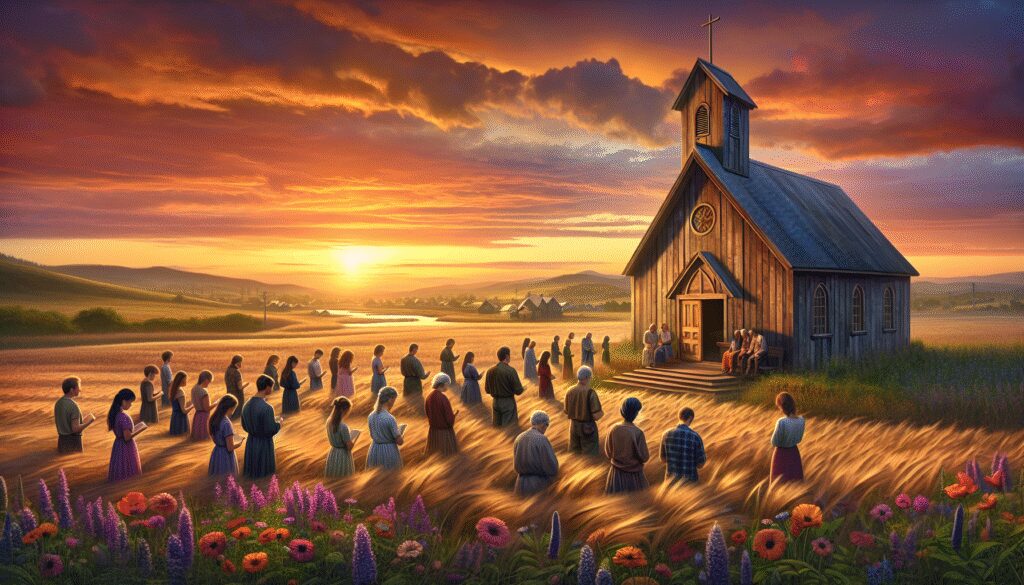
The Angelus bell holds profound significance within the context of this devotion. Traditionally, its ringing serves as a call to prayer, inviting the faithful to pause and reflect on the mysteries of faith.
Historically, bells were rung at specific times to signal the community to gather for prayer. The Angelus bell emphasizes:
- The importance of communal prayer.
- The reminder of God’s presence in daily life.
- The connection to the rhythm of the liturgical calendar.
This sound is not merely a call; it symbolizes a moment of grace, urging believers to shift their focus from daily tasks to spiritual contemplation.
How has the Angelus prayer evolved over time?
The Angelus prayer has undergone significant evolution since its inception in the 11th century. Initially, it was a simple recitation by monks, which gradually transformed as it spread throughout Europe.
Key milestones in its evolution include:
- The formalization of the prayer’s structure in the 16th century by the Popes.
- The integration of the Hail Mary, reinforcing Mary’s pivotal role in the prayer.
- Expansion from evening prayer to additional recitations at noon and morning, reflecting the Annunciation, the Passion, and the Resurrection.
These developments have enriched the prayer’s significance within Catholic devotion, making it a central aspect of daily spiritual practice.
What are the biblical references in the Angelus prayer?
The Angelus prayer is steeped in biblical references that highlight the central themes of faith. Notably:
- The Annunciation (Luke 1:26-38), where the angel Gabriel announces to Mary that she will conceive Jesus.
- The Hail Mary echoes Elizabeth’s words from Luke 1:42, recognizing Mary’s blessedness.
- The closing supplication reflects the desire for participation in Christ’s Passion and Resurrection (John 1:14).
These scriptural foundations provide depth to the prayer, allowing believers to connect their daily lives with the sacred narratives of the Bible.
How does the Angelus connect believers with divine grace?
The Angelus prayer serves as a powerful means of connecting believers with divine grace. By regularly reciting this prayer, individuals engage in a practice that fosters spiritual growth and reflection.
Through the invocation of Mary’s intercession, the prayer emphasizes:
- The importance of humility and openness to God’s will.
- The acknowledgment of one’s need for grace in daily life.
- The call to reflect on the mystery of the Incarnation and its implications for personal salvation.
This connection to divine grace is a profound aspect of the Angelus, inviting believers to experience the transformative power of God in their lives.
For those wanting to learn more about the significance of the Angelus, here’s a related video that elaborates on its importance in Catholic devotion:
In conclusion, the Angelus is not just a prayer but a profound tradition that encapsulates the essential aspects of Catholic faith. Its roots in scripture, its structured form, and its call to reflection make it a vital component of daily spiritual life.